Moving Checklist for Ontario: Week by Week, 8 Weeks to Moving Day
Updated · 44 items · 8 min read
Here is the whole move in one sentence: eight weeks out you book and settle the dates other people control, four weeks out you declare the hard items and reserve the elevator, two weeks out you change the addresses, the week of you pack and label by room, and on the day you keep your documents with you and clear a path to the truck.
The list below is written from the truck’s side of the job. We are a Toronto and GTA moving company, and most of the delays we see are not caused by people packing badly. They are caused by three or four things that were easy in week eight and impossible in week one — a service elevator that was never booked, a piano nobody mentioned, a basement of furniture that has to come apart, and a 60-day notice given at 40 days.
Tick items as you go. Your progress is saved in this browser only. Print it, or save it as a PDF, if you would rather work from paper.
8 weeks out
Book the move, and lock the two dates that are not yours
Two dates on a move are decided by other people: the last day your lease or closing allows, and the window your building will release its service elevator. Everything else bends around those, so settle them first.
Month-end, the first of the month, and the summer weekends go first across the whole industry. If your date is fixed by a closing or a lease, book as early as you can — not because prices change, but because the crew size you actually need may not be available at two weeks’ notice.
6 weeks out
Get rid of things before you pay to move them
This is the only step on the list that reduces the bill directly. A local move is billed by the hour, so every box that goes in the truck is time going onto the invoice — loading, carrying, driving, unloading, and then living around it in the new place.
Be honest about the basement, the garage, and the storage closet. Those three are where the volume hides, and they are also where the items that need disassembly usually live.
4 weeks out
Declare the hard items and book the elevator
This is the step people skip, and it is the one that decides whether the quote resembles the invoice. A crew sized for a normal three-bedroom cannot absorb a piano, a safe, and a basement full of unassembled shelving that nobody mentioned.
Access matters as much as weight. A two-storey townhouse with a turn in the staircase needs three movers for beds, wardrobes, and pianos — with two, the piece has to be pivoted at the corner, and that corner is where railings, drywall, and the furniture itself get damaged.
2 weeks out
Change the addresses nobody reminds you about
None of this is hard, but it is long, and it is the part that quietly follows people for months. Work through it in one sitting rather than remembering pieces of it in November.
1 week out
Pack, and label by room rather than by contents
Labelling boxes with their contents helps you unpack. Labelling them by destination room is what saves money, because it stops the crew putting a box down in the hallway while somebody decides where it goes, and then carrying it a second time.
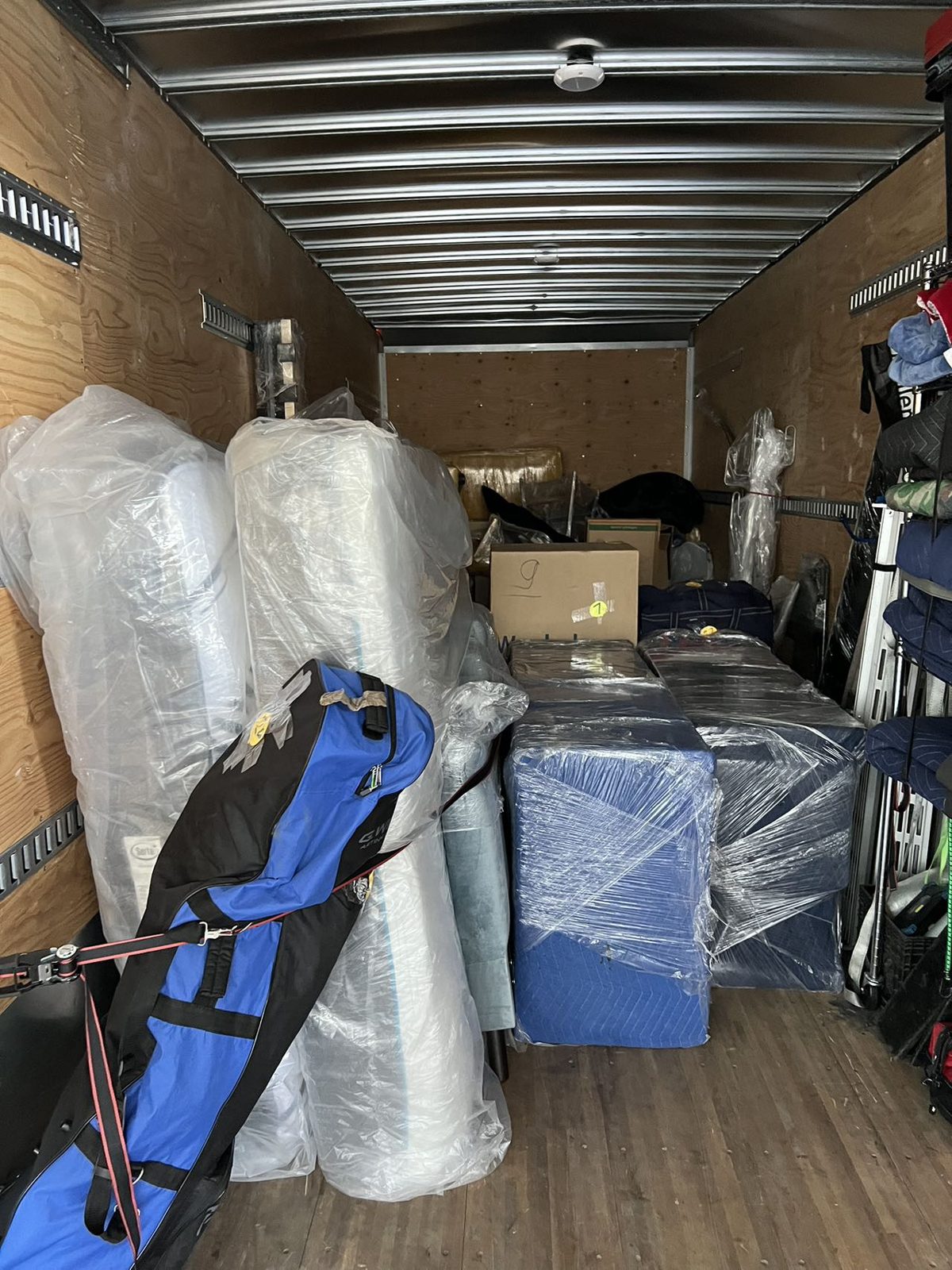
We tag items with colour stickers at the loading end and match a colour to each room at the new place. It takes a few minutes and it is one of the few packing habits that shortens an hourly job. Furniture and mattresses get wrapped in plastic film before they move, which protects the item and, more often, protects the walls, railings, and door frames it has to pass on the way out.
Moving day
The first thirty minutes decide the rest of the day
The clock starts when the truck arrives at your address, not when loading begins inside, so anything you can clear before then is time you do not pay for.
Walk the crew through the place once before they start. Point out what is fragile, what is heavy, what is not going, and where the truck should park. Two minutes of pointing prevents most of the questions that otherwise get asked one item at a time.
After the move
Close the loop in the first week
Unpack in the order you actually live: beds, bathroom, kitchen, then everything else. The colour labels make this the shortest part of the whole process.
What the Labelling and Wrapping Looks Like
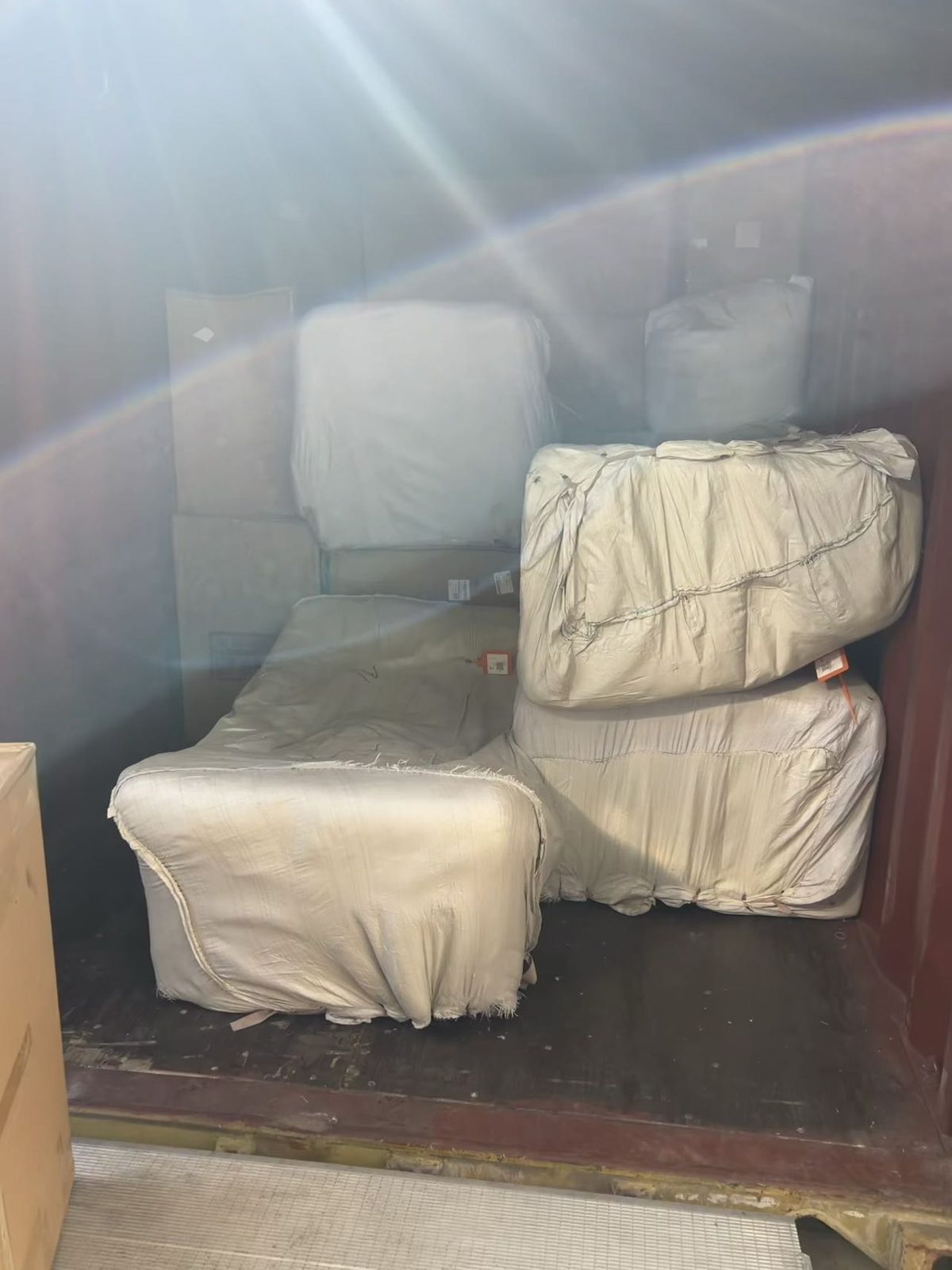
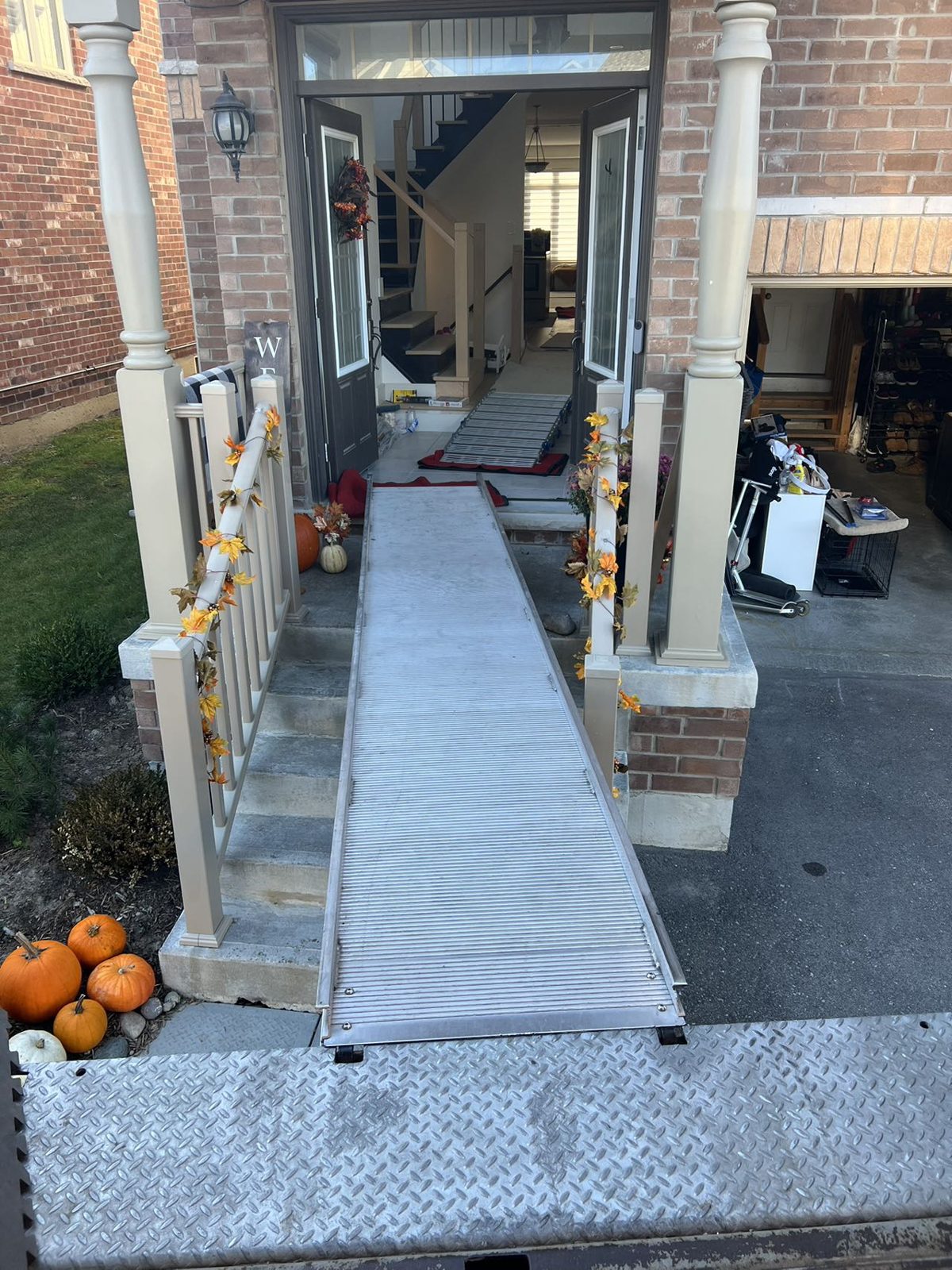
Colour stickers matched to rooms, plastic film on before anything moves, boxes staged in carry order, and the ramp bridged to the door where the driveway allows it.

Moving Checklist FAQs
How far in advance should I book movers in Toronto?
Four to eight weeks is comfortable, and month-end, the first of the month, and summer weekends need the longer end of that. Booking early is less about price than crew availability: the difference between two movers and the three or four your staircase actually needs is much harder to fill at short notice.
What should I not pack for the movers?
Movers cannot carry propane and other pressurised tanks, gasoline, paint, solvents, aerosols, ammunition, or perishable food. Keep passports, licences, ownership and lease documents, medication, jewellery, cash, laptops, and keys with you rather than in the truck — not because they are unsafe, but because you will want them before the truck is unloaded.
Do movers disassemble furniture?
Yes, when it is disclosed at booking. Beds, tables, shelving, treadmills, and washing machines can usually have basic disassembly and reassembly arranged as part of the move plan. Raised on the day with no notice, it costs extra time and may carry an additional charge, so confirm which pieces come apart before the quote is finalised.
How much do movers cost in Ontario?
Local moves are billed by the hour for the truck and crew together. G&T Moving charges $60 per hour for one mover with a pickup truck, $100 per hour for two movers with a 17 ft or 26 ft truck, and $195 per hour for four movers with a 26 ft truck, with a 2-hour minimum and 30-minute billing after that, plus a fuel and travel surcharge. Access conditions, not box count, are what usually separate two similar homes.
Do I need to be there on moving day?
Someone who can make decisions should be. Most of the questions on a move are judgement calls — what is fragile, what is not going, which room a piece belongs in — and answering them in person is far faster than answering them by phone while the clock runs.
Is there a printable version of this checklist?
Yes. Use the print button at the top of the checklist, or your browser’s print command, and choose “Save as PDF” if you would rather keep it on your phone. The print version drops the navigation and photos and keeps the checklist itself.