Piano movers in Toronto bill by the hour — G&T Moving charges $100/hour for two movers with a 17 ft truck, or $145/hour for three movers, with a 2-hour minimum. Most upright piano jobs in Toronto take two to three hours depending on stair count, parking, and whether the elevator is available. Grand and baby grand pianos nearly always need three movers and may take longer.
The rate is only part of the number. The total cost of a piano move is driven by stair count, parking,
building elevator rules, and whether the job needs two or three movers — which is decided by the staircase,
not by the piano's weight alone. Send photos before requesting a quote and you will get a number that holds.
A Real Piano Move, Step by Step
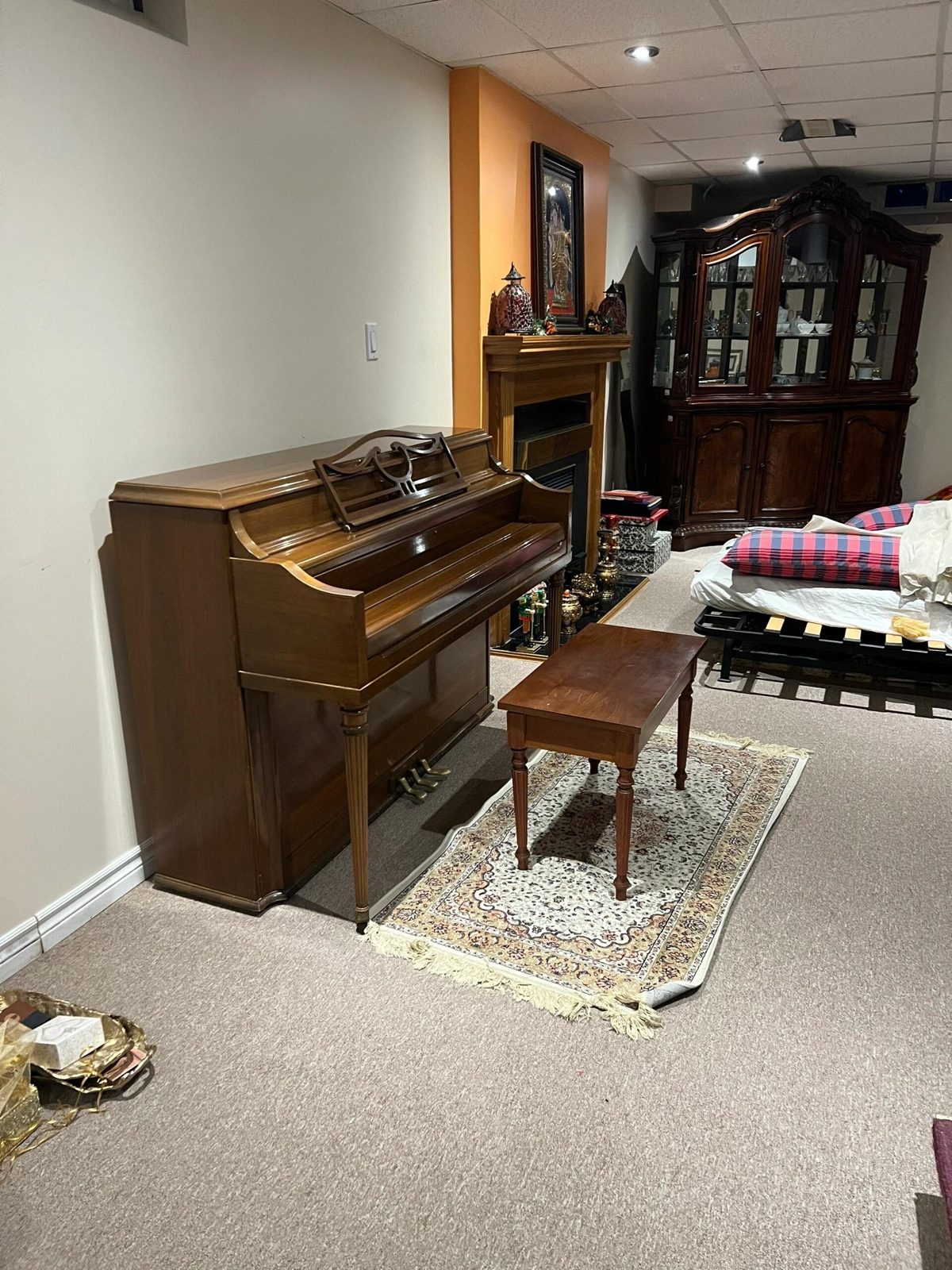
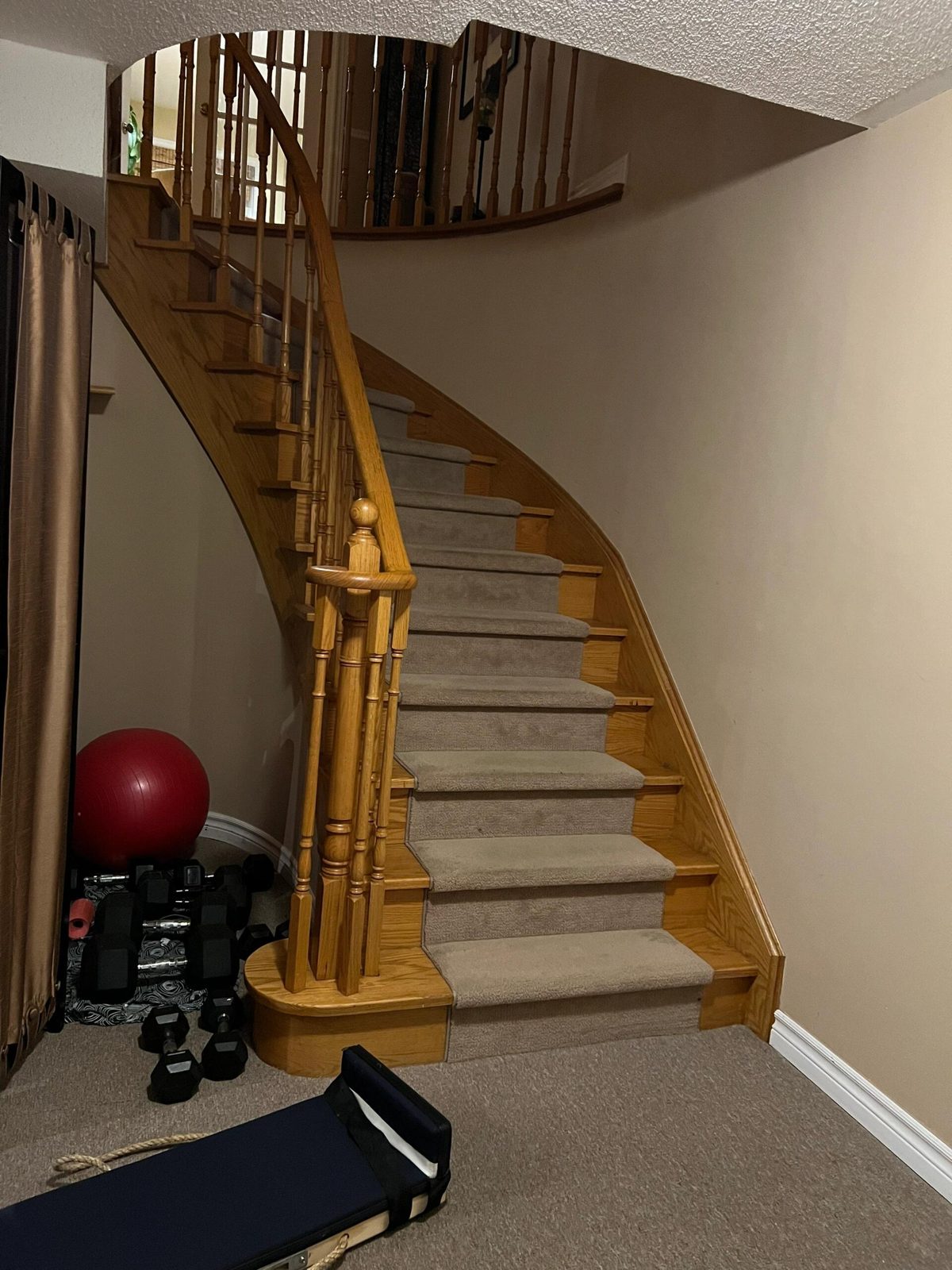
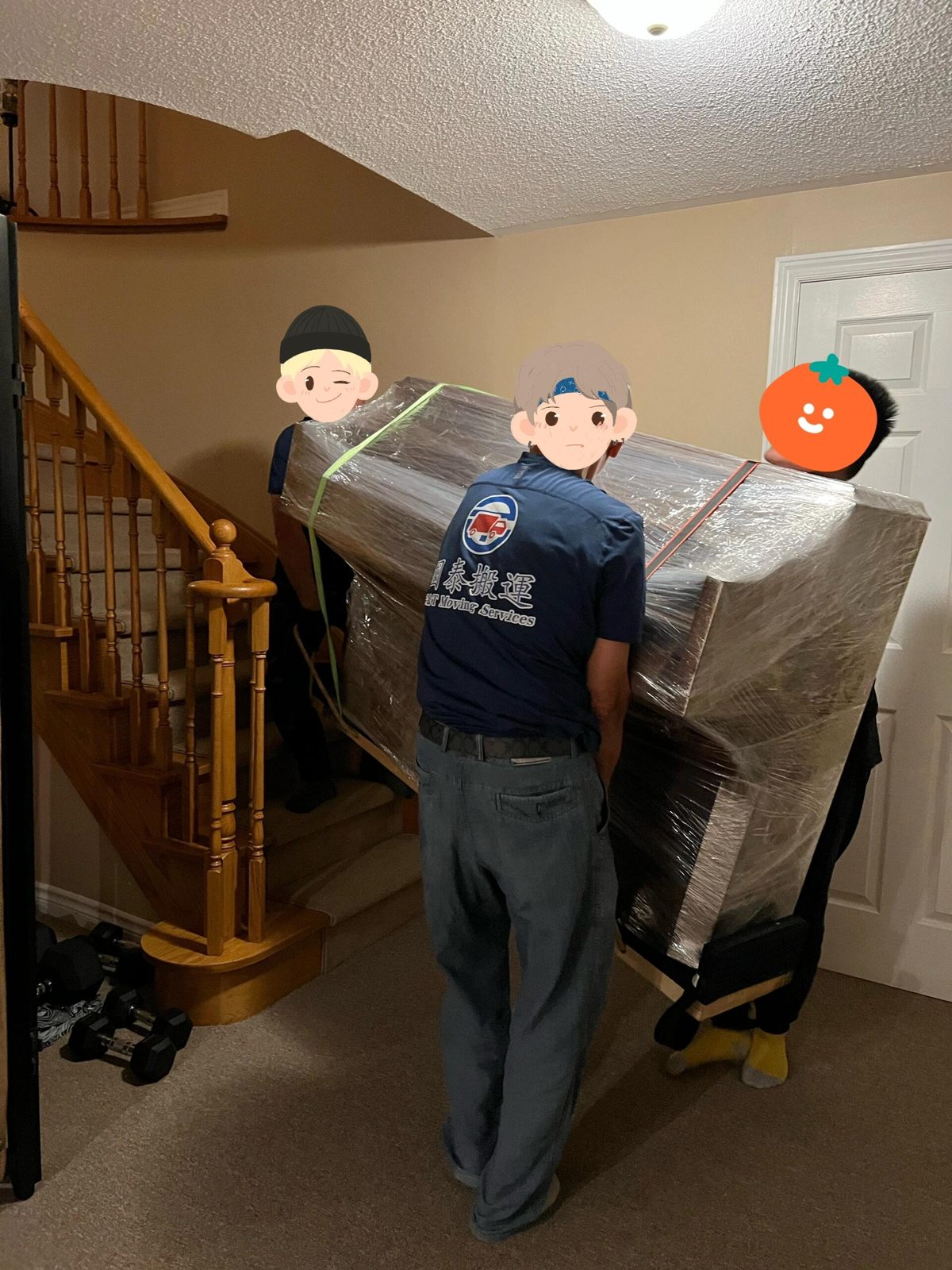
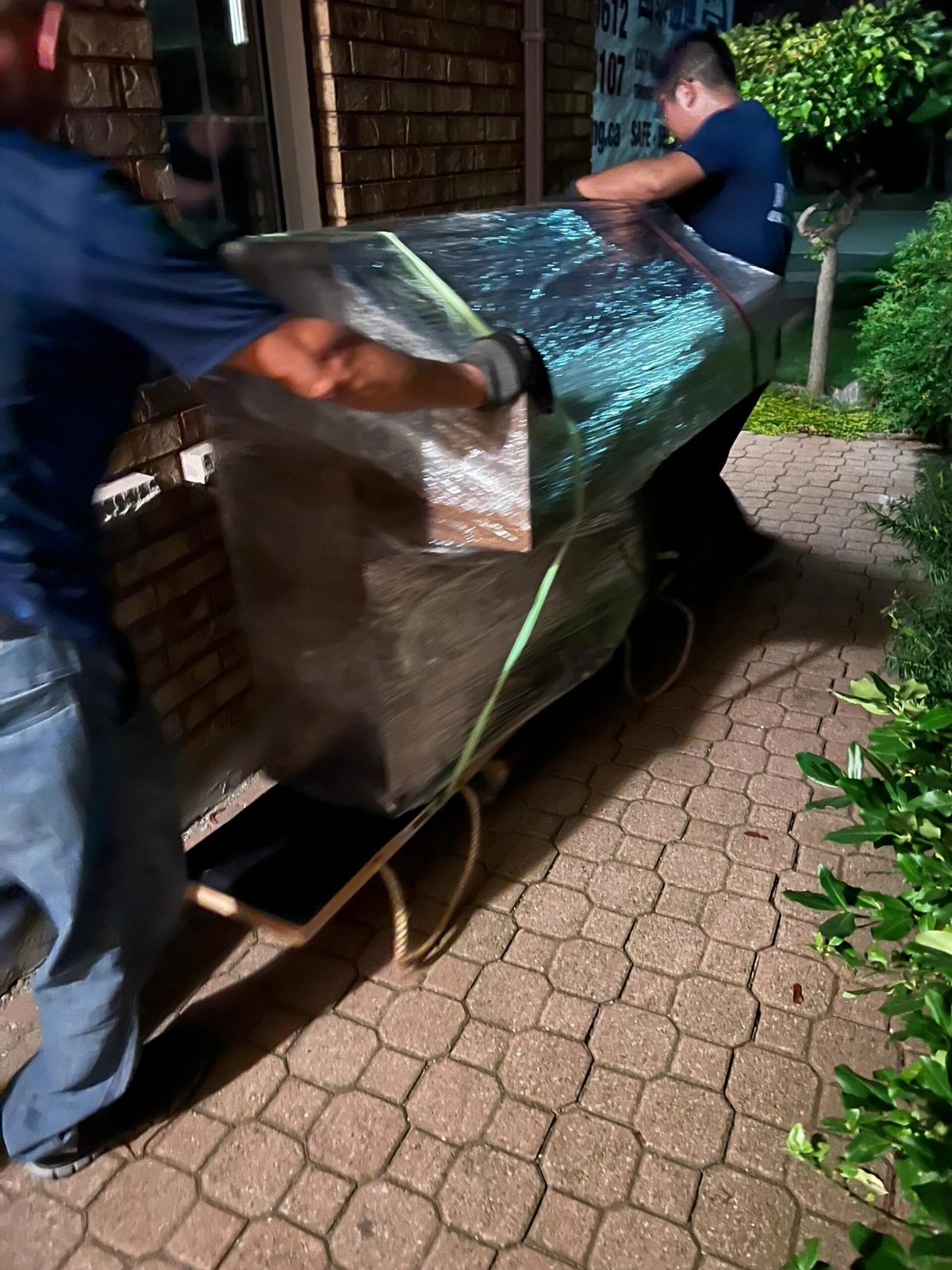
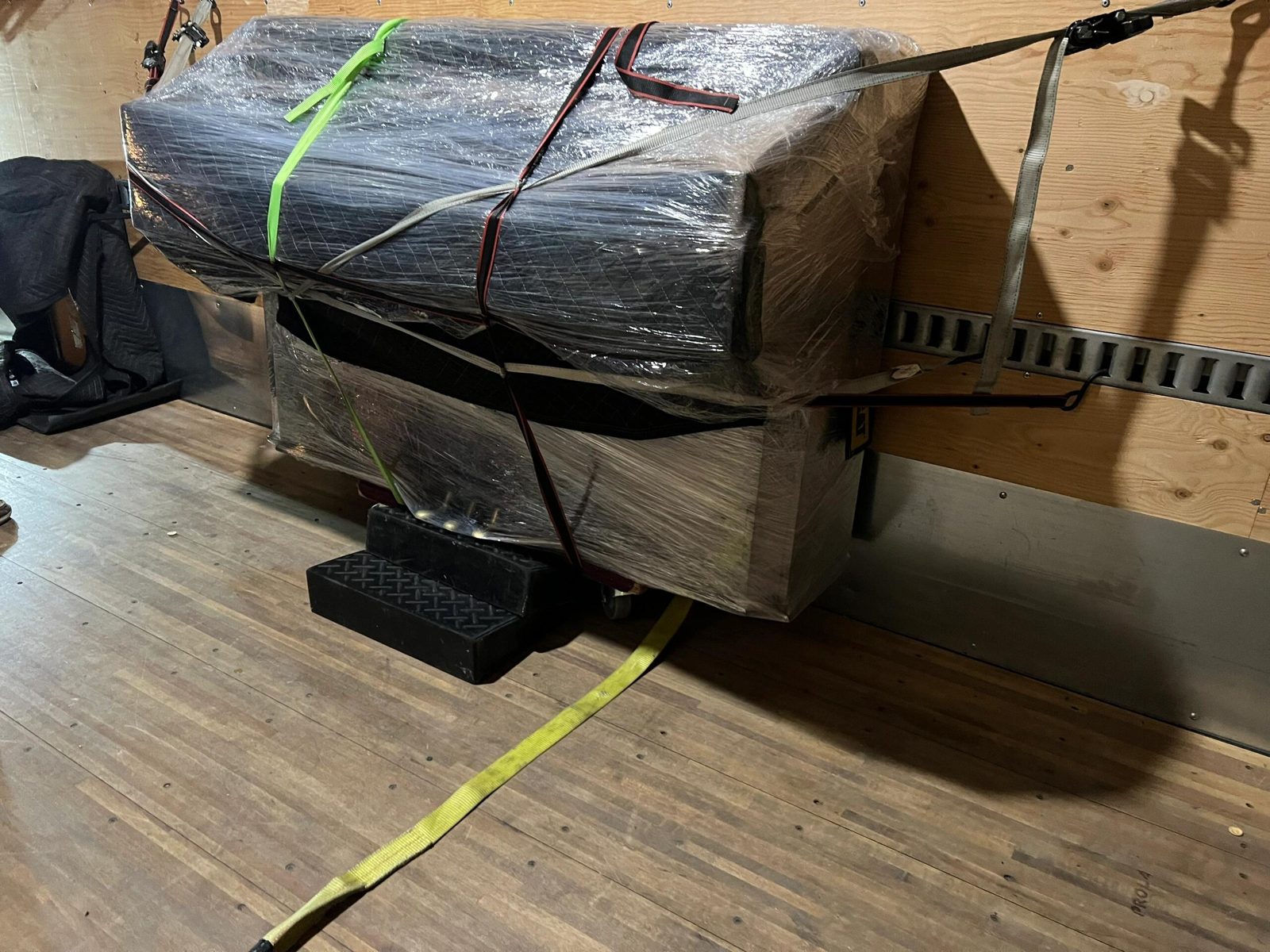
An upright piano out of a finished basement, up a curved staircase, onto a skid board, and strapped down for the road. This staircase is exactly why this job needed three movers.
Where the job starts: an upright piano in a finished basement.The staircase decides the crew. Curved, carpeted, and too tight for a dolly.Three movers, wrapped and strapped, controlling the piano through the turn.Out of the house on a piano skid board, not carried across the driveway.Secured for the road: wrapped, blocked, and strapped to the wall.
How Much Does Piano Moving Cost in Toronto?
Piano moves are billed at the same hourly rates as any other local move — the difference is that
pianos almost always need the right crew size on the right equipment, so the job rarely comes in under
the minimum. Below are the rates that apply to most Toronto piano moves.
Vehicle and crew
Hourly rate
Best suited for
2 movers with 17 ft truck
$100/hour
Upright piano, flat floor or straight stairs, no mid-flight turn
3 movers with 17 ft truck
$145/hour
Upright with basement stairs or stair turn; any baby grand or grand piano
3–4 movers with 26 ft truck
$150–$195/hour
Piano moving combined with a full household or commercial move
The most common piano move in Toronto. An upright stands 48–60 inches tall, weighs 300–500 lbs, and moves vertically on a dedicated piano board. Basement stairs, tight porch steps, and condo elevator rules are the variables that drive time.
Baby Grand Piano
Baby grands (4'6″–5'8″) have to be partially disassembled before moving: lid removed, legs detached, and the body moved on its side on a piano board. Three movers are standard. Tight turns and low ceilings need to be confirmed before the crew arrives.
Grand Piano
Full grand pianos (over 5'8″) follow the same process as baby grands but are heavier and longer. Doorway widths, stair widths, and garage clearance all need to be confirmed in advance. Always quoted as a custom job.
What drives the price more than the piano itself
Access Conditions Decide the Crew Size
Two movers can move an upright piano on a flat floor or down a straight staircase. Three movers are
needed the moment the staircase has a mid-flight turn — which is the default layout in a Toronto
townhouse. The access conditions below are what we confirm before every piano quote.
Stair count and whether any staircase has a tight turn mid-flight.
Porch steps at the front door, and how much clearance there is at the base.
Whether the building has a loading dock, freight elevator, or street access only.
Condo elevator booking window and whether the elevator fits a vertical piano.
Distance from the truck to the piano — a long hallway or driveway adds time.
Floor protection required by the condo or strata — adds setup before the move starts.
Whether the piano is in a basement with a finished staircase (the most common high-risk scenario).
How We Move a Piano
Every piano move follows the same process. The steps below cover what happens between the truck
parking and the piano sitting level in the destination room.
1
Photo review before the quote
Send photos of the piano, the staircase, the porch, and the destination room. A photo of the basement staircase is worth more than a description — it shows us the tread depth, any mid-flight turn, and whether a piano board will fit the railing clearance.
2
Equipment loaded to match the job
Every piano job gets a dedicated piano board, moving straps, moving blankets for the body, and corner protection. For baby grand and grand pianos the crew brings leg-removal tools and pedal-lyre supports.
3
Floor and corner protection goes down first
Before the piano moves, felt pads go under any furniture near the path, and door frames and baseboards get covered. Most damage in a piano move happens at corners and landings, not on the stairs themselves.
4
Piano onto the board, strapped and stable
An upright is tilted onto its back casters and walked onto the piano board. Blankets go on first, then straps cinched across the body. The piano does not travel vertical on stairs — it rides the board flat, with the crew controlling the angle.
5
Stairs: three movers, not two
When a staircase has a mid-flight turn — the most common layout in Toronto townhouses — two movers cannot manage the rotation safely. Three movers means one person controls the nose, one controls the tail, and one handles the turn. The landing usually decides whether a piano board fits, or whether we need to manually carry it through.
6
Placement at destination
The crew places the piano on its casters in the target room and sets it level. For uprights with decorative legs or unusual feet, the crew checks stability before leaving the room.
Why the Basement Staircase Is the Hardest Part
The majority of difficult Toronto piano moves start in a finished basement. A straight staircase
with a clear run — meaning no turn, no low header, no winder steps — can be handled by two movers
with a piano board. What changes the quote is a 90-degree turn at a landing.
At a landing turn, one mover at the top cannot see what the mover at the bottom is doing, and the
piano board cannot rotate cleanly if the landing is narrow. This is when three movers earn their
cost: a third person at the turn manages the rotation while the other two control the board angle
on the upper and lower flights. Rushing this with two movers is where pianos and walls both get
damaged.
Send a photo of the staircase.
It is the most useful thing you can do before asking for a piano moving quote. One photo of the
landing tells us whether this is a two-mover job or a three-mover job.
Condo Piano Moves in Toronto
Condo piano moves add one layer that residential houses do not have: the building. Most condo
buildings in Toronto will require a service elevator booking, a protected moving window (usually
a four-hour block), and a certificate of insurance naming the property. These are straightforward
to arrange — they just need to be confirmed before the date, not on the day.
The second thing worth checking is the elevator interior dimensions. Older Toronto condo elevators
can be narrow, and an upright piano travelling vertically may not fit. When the elevator is too
narrow, the piano board goes flat in the elevator and the piano rides lying down — which works, but
adds time. Confirm with the building manager before booking.
What to Send for an Accurate Piano Moving Quote
A photo and an address get you further than a phone description.
Piano type: upright, baby grand, or grand.
Pickup address and which floor the piano is on.
Photo of the staircase if stairs are involved — especially any mid-flight turn.
Whether the pickup location is a house, townhouse, or condo.
Delivery address and floor.
Any condo booking rules or loading dock requirements at either end.
Target date and whether the move is time-sensitive.
Whether the piano is being moved alone or as part of a full household move.
Where We Move Pianos
Dispatched from 9390 Woodbine Ave, Markham, ON L6C 0M5, near Highway 404 in Markham. We cover
Toronto and the GTA seven days a week, including evenings and holidays.
Piano moving in Toronto is billed by the hour. G&T Moving charges $100/hour for two movers with a 17 ft truck, or $145/hour for three movers — with a 2-hour minimum and 30-minute billing increments after that, plus a fuel surcharge. Most upright piano moves in Toronto take two to three hours. Grand and baby grand jobs almost always take longer and require three movers because of disassembly time.
Are piano movers different from regular movers?
Yes. Piano moving requires a dedicated piano board (a flat board with straps and castors that holds the piano safely on stairs), specific blanket-and-strap technique, and enough crew to manage a tight staircase turn without the piano shifting. A regular household team moving furniture can move a piano, but only if they have the right board and know how to use it on stairs.
How do movers move an upright piano?
An upright piano is tipped back onto a dedicated piano board, wrapped in blankets, and secured with straps before it moves. On stairs, two or three movers control the descent — one at the top, one at the bottom, and a third at any mid-flight turn. The piano rides the board at a controlled angle rather than being carried upright. At destination it is walked off the board onto its casters and placed in the room.
Do you need three movers to move a piano?
Two movers can handle an upright piano on a flat floor and on a straight staircase with no landing turn. Three movers are needed when the staircase has a mid-flight turn, when the piano is going in or out of a basement, when it is a baby grand or grand piano (which requires disassembly), or when porch steps and a tight front door are involved. G&T charges $145/hour for a three-mover crew with a 17 ft truck.
Can you move a piano from a basement?
Yes, but the basement staircase is the hardest part of most Toronto piano moves. A finished basement with a straight staircase and no turn can usually be handled by two movers. A staircase with a 90-degree turn at the landing typically requires three movers and sometimes partial wall protection. Send a photo of the staircase when you request a quote — it is the single most useful piece of information for pricing the job accurately.
How do you move a baby grand or grand piano?
A baby grand or grand piano has to be partially disassembled before it moves: the lid comes off, the legs are removed (usually three legs plus the pedal lyre), and the body is padded and placed on its side on a piano board. Three movers are standard. Doorway widths, stair widths, and any ceiling height restrictions need to be confirmed before the move. The piano is reassembled at the destination.
Do you provide insured piano moving in Toronto?
Yes. G&T Moving holds commercial liability insurance, cargo insurance, and public liability insurance. All three are relevant to a piano move — cargo insurance covers the piano in transit, liability covers the building and property. A certificate of insurance can be issued if your condo or building manager requires it.
What information should I send to get a piano moving quote?
The most useful details are: piano type (upright, baby grand, or grand), pickup address and floor, stair count and whether the staircase has a mid-flight turn, delivery address and floor, and any condo rules about elevator booking or loading dock time. Photos of the piano, the staircase, and the destination room give us the clearest picture.
Can you move a piano to or from a condo in Toronto?
Yes. Condo piano moves require elevator booking and usually a protected moving window from the building. Some buildings also ask for a certificate of insurance. Confirm the elevator inside dimensions before booking — some older Toronto condo elevators are not wide enough to take an upright piano vertically, and it will need to travel lying on the piano board instead.