After-Hours Commercial Moving in Toronto: Malls, Plazas & Office Towers | G&T Moving Blog
Yes, a commercial move in Toronto can be done after hours. Many malls, plazas, and office towers only allow movers in after 6 pm, and some not until 9 pm, once tenants and shoppers have gone. G&T schedules these as normal work: our commercial crews can work through to 2 AM, so a store or office closes at the end of the day and opens the next morning at the new address or with the new layout.
An evening move is not just a daytime move started late. The building has less staff, the dock may have a hard close, the elevator booking is usually a fixed block, and there is nobody from the property office to call if something is unclear. This guide covers how we plan around that, and what you should confirm before you pick a night.
Key Takeaways
- Malls and office towers commonly restrict moves to after 6 pm or after 9 pm. Ask the property manager for the exact window in writing.
- Our commercial crews can work until 2 AM. Work outside normal hours carries an additional fee, confirmed in the quote rather than added afterwards.
- Book the service elevator and dock as one block, and confirm after-hours security or fob access at both addresses.
- Send the certificate of insurance wording early. We issue it the same day, but many buildings want it days before.
- The owner leads commercial jobs on site, so there is one person you can reach at midnight who can make a decision.
What Happens Inside the Window
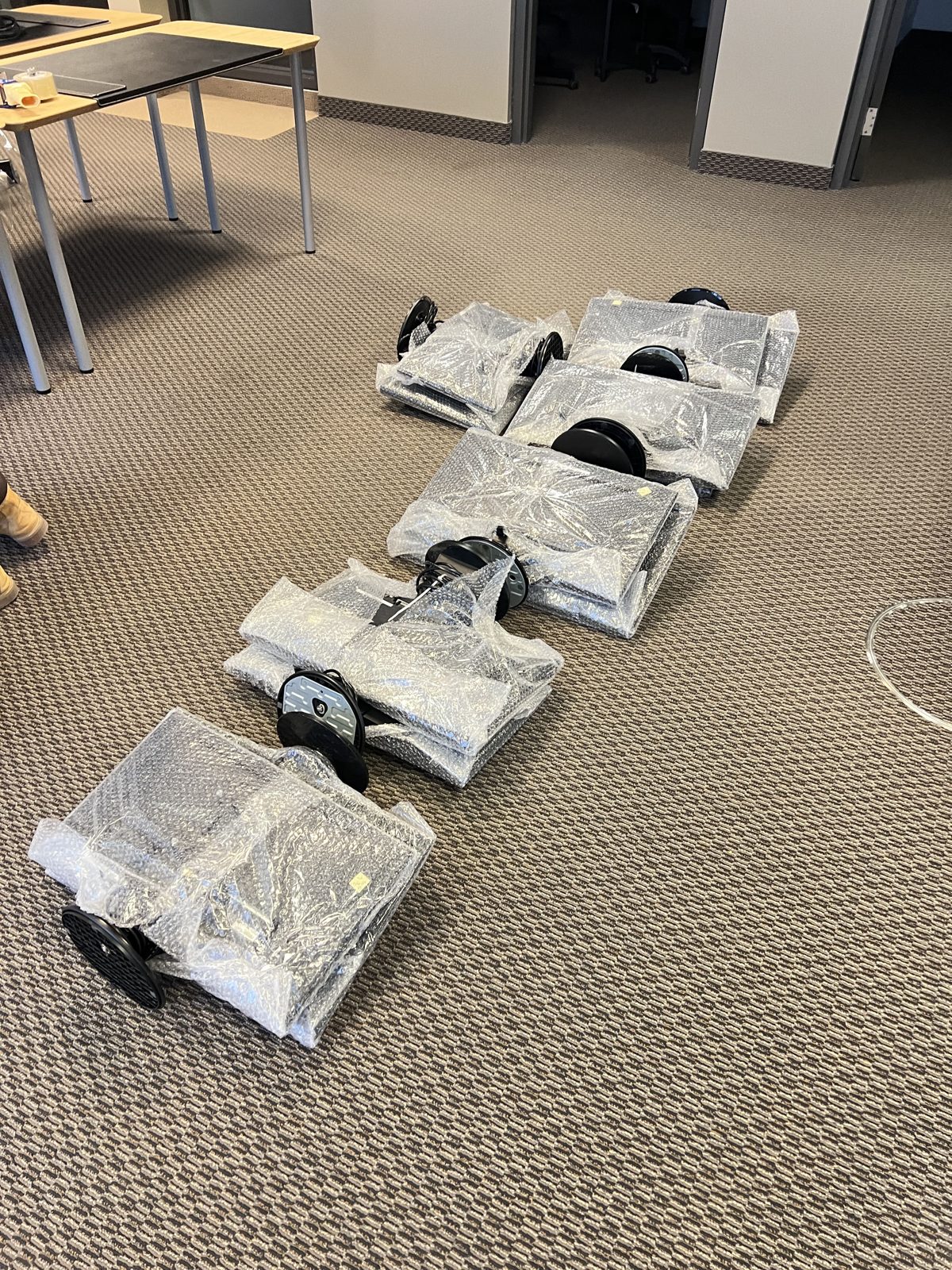
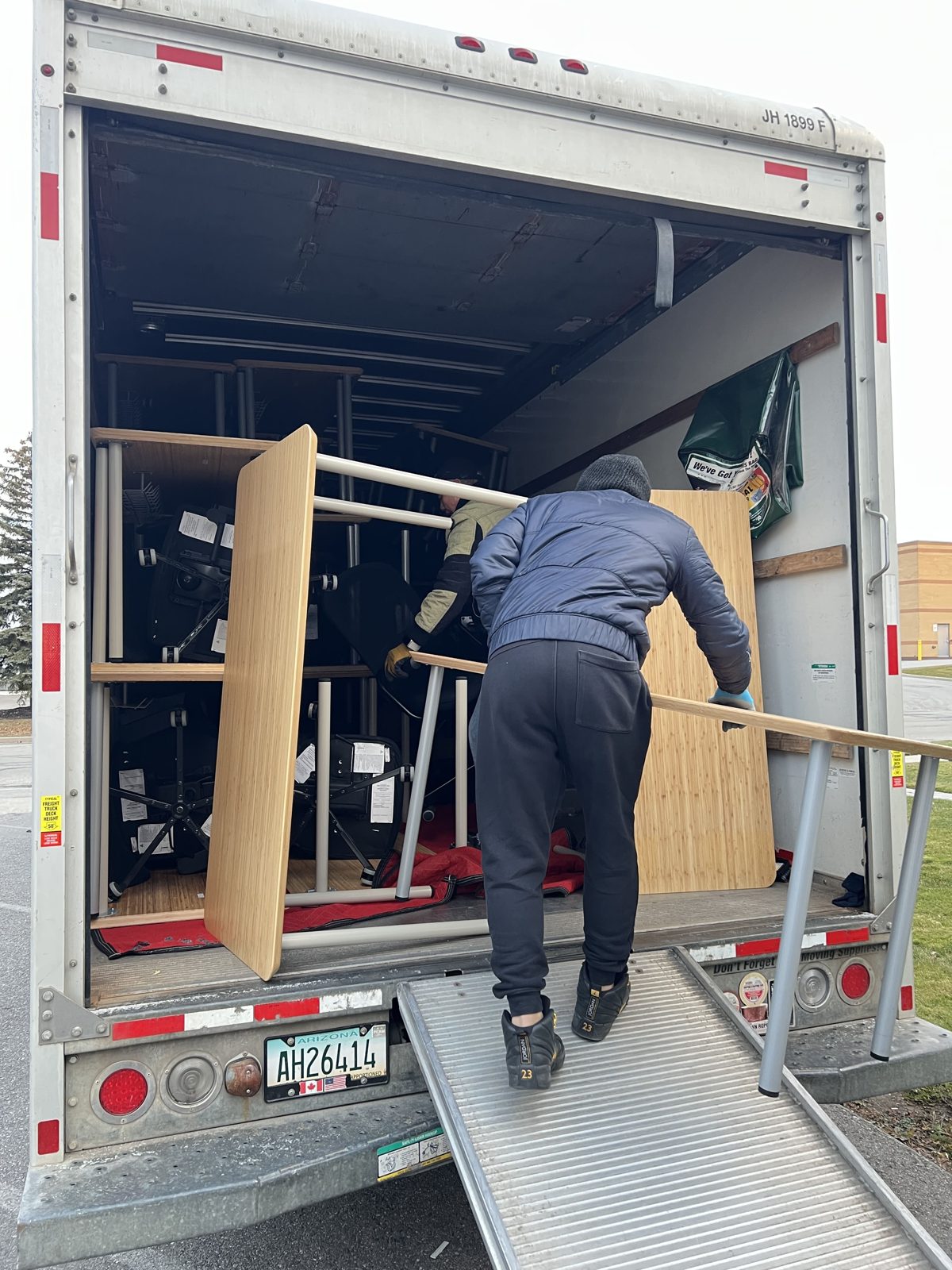
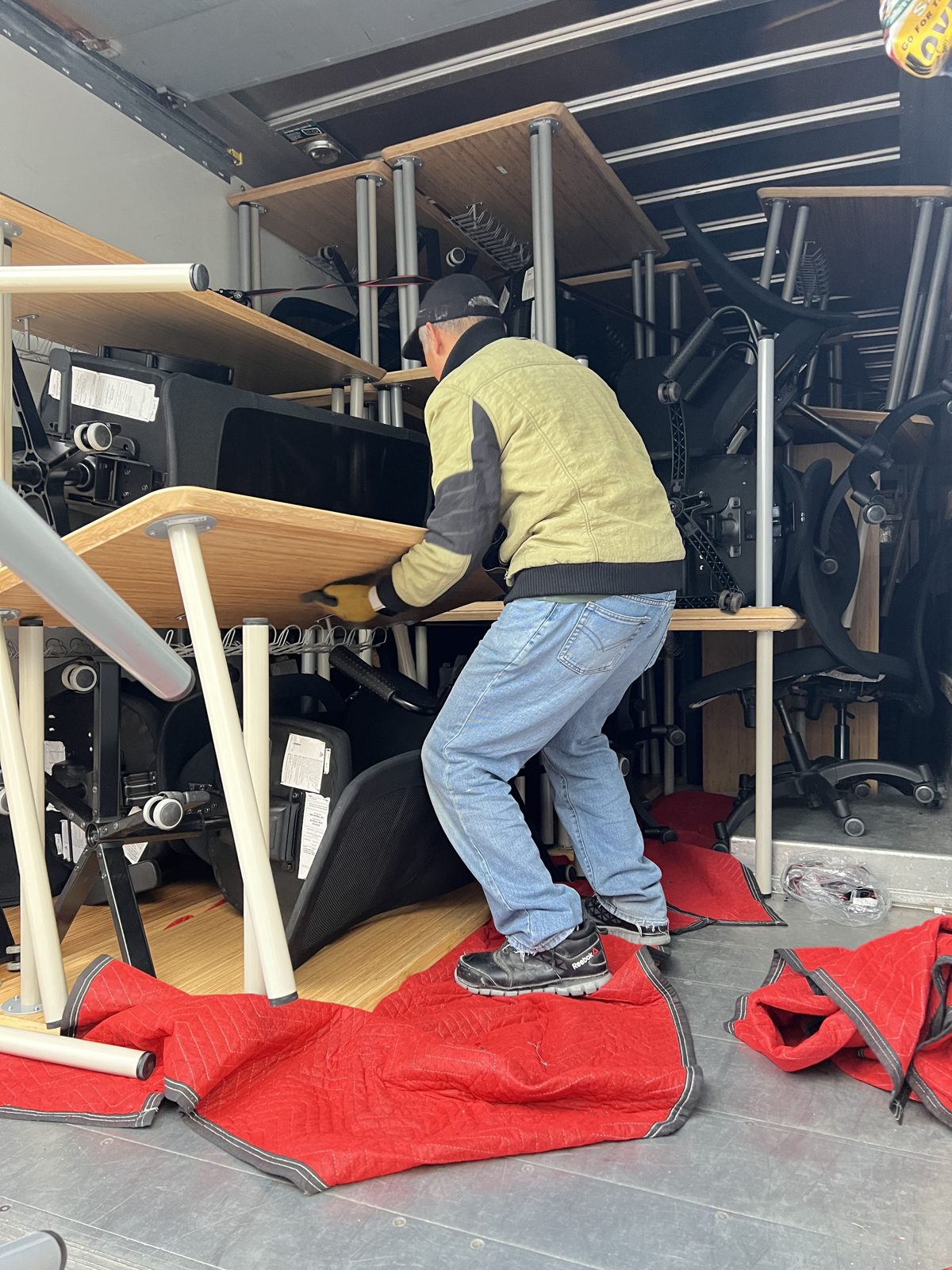
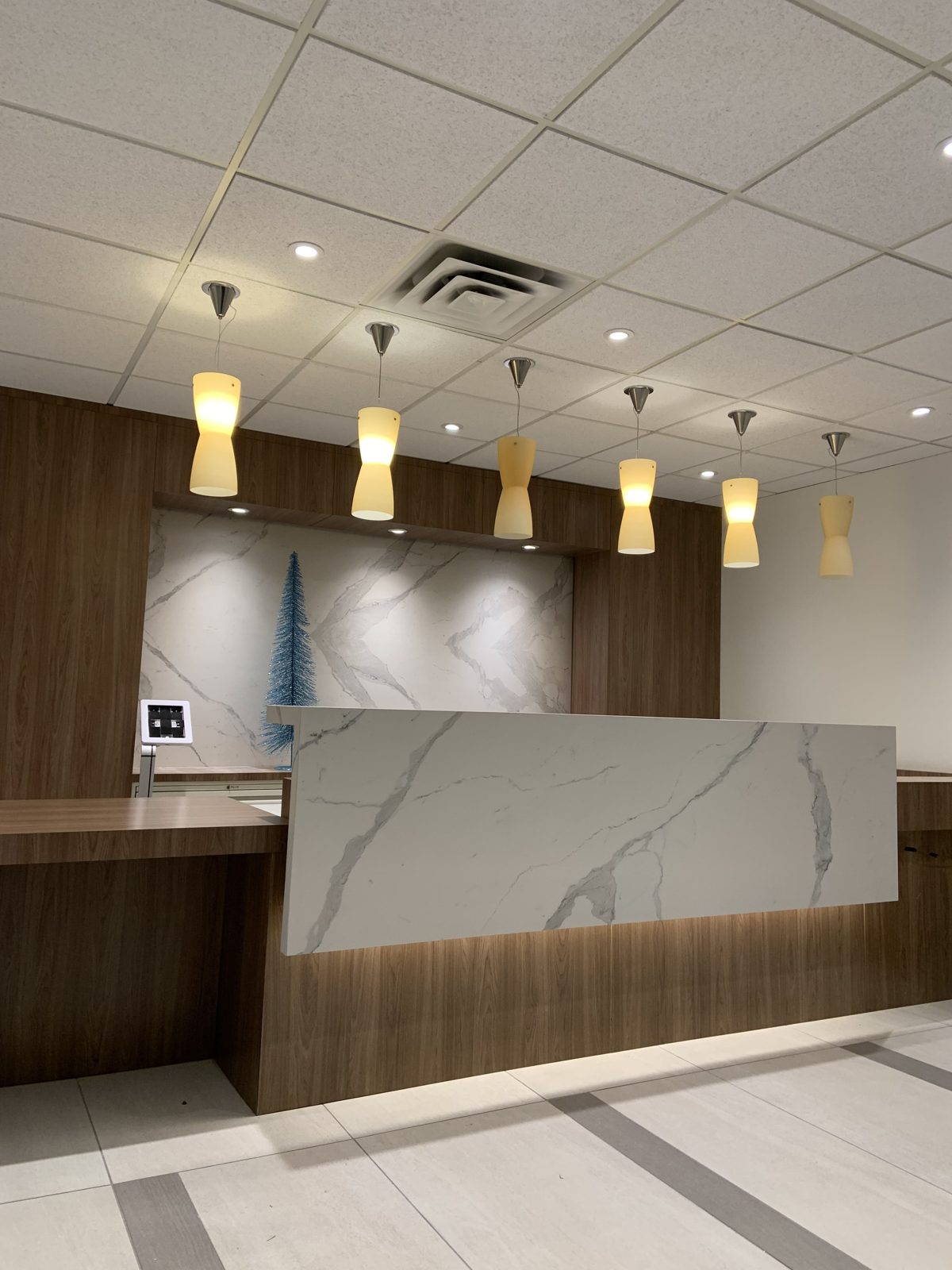
Chairs wrapped before they leave the floor, desks loaded up the ramp, every layer strapped, and the front counter set up before opening.
Why so many buildings only allow evening moves
In a mall, moving furniture through the concourse during trading hours is a safety and liability problem, so landlords push it to after closing. In an office tower, service elevators are shared with couriers, cleaners, and other tenants all day, and the property manager would rather give a mover a clear block at night. Plazas often have one shared loading area that the other units need during business hours.
The result is the same: the window is set by the building, and it is often 6 pm to midnight or 9 pm onwards. A mover who can only work a day shift either asks you to close for a day or splits the job over several nights.
Working until 2 AM
Many malls, plazas, and office towers will not let a mover in until after 6 pm, and some not until 9 pm, once tenants and shoppers have left. That is routine for us: commercial crews can work through to 2 AM, so a store or office can close at the end of the day and open the next morning in the new space or with the new layout.
Evening and weekend commercial moves are available — we operate 365 days a year. Work scheduled outside normal hours carries an additional fee, which we confirm when we quote the window, so it is priced before you commit to a date rather than added afterwards.
For most single-floor offices and retail units, one evening is enough when the crew is sized properly. Larger jobs are split deliberately — for example, packing and staging on one evening and the main move on the next — rather than running over because the window was underestimated.
What to confirm with the building
After hours there is usually no property office to call, so everything has to be agreed in advance. Get these from both the old and the new building:
- The exact start and hard end time for moving, and whether that includes setup and cleanup.
- Which service elevator and loading dock are assigned, and whether the booking needs a deposit.
- Security or fob access after hours, and the name of the guard or contact on shift.
- Certificate of insurance wording and coverage. We carry commercial business, public liability, and cargo and transport insurance, and a certificate of insurance is issued right away — send us the building’s certificate holder wording and coverage requirements and it goes out the same day, not on the morning of the move.
- Floor, wall, and elevator protection the building expects in common areas.
- In a mall: the route from the unit to the dock and whether the concourse lights stay on.
How the crew is sized for a fixed window
A commercial move lives or dies on the item list. Either you give us exact counts of what is moving, or we come to the site and quote it in person — and for anything beyond a small office, the site visit is usually the better call. The reason is timing: commercial jobs almost always run inside a fixed window, so the crew has to be sized for the real scope up front. When the scope is accurate we staff the job to cover every step; when it is a guess, something gets discovered at 9pm on a Saturday.
Evening jobs are billed the same way as daytime commercial work — $150 per hour for three movers with a 26 ft truck and $195 per hour for four, with a 2-hour minimum — plus the after-hours fee and the fuel and travel surcharge. When the window is short, adding a fourth mover is often cheaper than missing it.
Who is in charge at midnight
The hardest moment in an after-hours move is the surprise: an elevator that is out of service, a dock blocked by a delivery, a desk that will not fit through a door. Someone has to decide on the spot.
Commercial jobs are led on site by the owner, not handed to a dispatcher. You have one direct number from the walk-through to the last piece placed, and someone answers it during the move — including at midnight. The crew is our own team, working to written rules: assigned roles, items inventoried and tagged before they leave the floor, nothing opened or set aside without the client’s say-so, and every area walked again before we leave. Your furniture, equipment, and records are treated as company assets, because that is what they are.
Opening on time the next morning
A move is only finished when the business can open. For an office that means desks assembled and computers working; for a store it means fixtures standing and the counter ready. If those are done by separate contractors the next day, the overnight move does not actually save a day.
The same crew can assemble workstations and fixtures, mount TVs and signage, set up computers, and handle licensed electrical work with an electrician who has more than 10 years of experience. Booking it together means it is all done inside the same window.
Plan an after-hours move
Send both addresses, the window each building allows, and your item list or ask for a site visit. Our office and commercial moving page has the full rates and the installation and IT options.
Testimonials
Real customer reviews
If you are planning a move, piano job, or heavy-item delivery, these reviews give a better sense of the real service experience.
“We moved a four-bedroom home from Toronto to Ottawa, including a piano, and everything arrived safely. The crew was professional, punctual, careful, and made the whole move feel far less stressful.”
Jackson G.
Long-distance house move with piano
“The team arrived on time, worked efficiently, handled our belongings with care, and kept communication clear from start to finish. The whole process was smooth and stress-free.”
Yaya H.
Smooth and efficient moving day
“They worked efficiently without wasting time, had a great attitude, and offered a very reasonable price.”
Wendy X.
Fast service with fair pricing